
Research use resources
How to read a peptide lab report
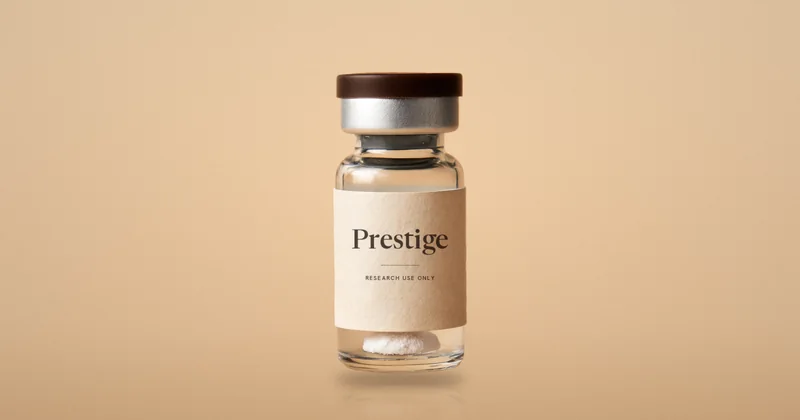
A lab report, also called a certificate of analysis (COA), is an independent lab’s record of what it measured in one sample. Most peptide reports answer the same four questions: how pure the sample is, whether it is the compound named on the label, how much of it is in the vial, and, on some reports, whether it passed an endotoxin screen. This guide walks through each one, using the reports linked on our own product pages as examples.
The short version
Traceability: the report number, product and batch should match what you are looking at, and the lab should be able to confirm the report.
What is a certificate of analysis?
A certificate of analysis is issued by the lab that ran the tests, not by the seller. It covers the sample the lab received, at the time it was tested. Our current reports come from independent labs such as Kovera Labs and Premier Analytical Sciences. Each one is linked on the product page under Specifications & documentation, next to the strength it belongs to, and every report is listed on our research materials page.
The parts of a report
Reports look different from lab to lab, but the same parts show up on almost all of them.
| Part | What it tells you | Where to look |
|---|---|---|
| Report number | The report’s own ID. You need it to verify the report with the lab. | Kovera: top right, starts with KVR. Premier: left column, starts with PAS. |
| Dates | When the sample was received, tested and the report released. | Kovera: Certified date. Premier: the Chain section. |
| Sample | The product, batch and the amount printed on the label. | Kovera: Sample information. Premier: the line under the compound name. |
| Results | Purity, identity, content and any other tests. | Kovera: Test results. Premier: the row of numbers across the middle. |
| Method | How each result was measured. | Kovera: under the chromatogram. Premier: Methods & limits. |
Purity: what the HPLC number means
Purity is measured with high performance liquid chromatography (HPLC). The lab dissolves a small amount of the sample and runs it through a column that holds each component back for a different length of time. A detector set to 214 nm, a wavelength where peptide bonds absorb light, draws a peak for everything that comes out. Purity is the main peak’s area as a share of the area of all the peaks.
On our Copper-Pep report from Kovera Labs (KVR-2026-58C905), the chromatogram shows one tall peak labeled GHK-Cu a little after 3 minutes. The result is 99.614%, against Kovera’s standard of more than 98%.
What purity doesn’t tell you: it compares peaks with each other, so it says nothing about how much compound is in the vial. Things that barely absorb light at 214 nm, such as water and salts, don’t show up as peaks at all. That is why purity and content are reported separately.
Identity: what mass spec adds
HPLC shows that one compound makes up most of the sample, but not which compound it is. Mass spectrometry (MS) answers that by measuring the molecular mass of what comes off the column. When it matches the expected mass of the named compound, identity is confirmed.
Kovera lists this as Identity Confirmation (LC-MS), with the compound’s name as the result. Premier runs both tests together (HPLC-UV / ESI-QTOF-MS) and reports identity as Conforms, as on our Kisspeptin report (PAS-2026-9628), where purity was 99.08%.
Mass spec confirms mass, not every detail of the structure. Two molecules with the same mass, such as the same amino acids in a different order, need further tests to tell apart. For routine reports, a matching mass together with a clean chromatogram is the standard check.
Content: how much is in the vial
Content is the amount of the compound the lab measured in the tested vial, in milligrams. Some labs also show it as a percent of the label, where 100% means the vial held exactly what the label says. Our Copper-Pep report shows 102.88 mg against a labeled 100 mg. Premier shows both numbers and states its basis: per vial.
Content is not the same as the weight of the powder. A freeze dried peptide also holds some water and salts left over from making it, so the powder weighs more than the peptide inside it. Labs measure the peptide itself, and the amount in each vial varies from fill to fill, so content can land over or under the label even when purity is high.
The endotoxin screen
Endotoxins are fragments of the outer wall of certain bacteria. Some reports include a screen for them, usually done with the LAL test and reported in endotoxin units per milliliter (EU/mL). Our Kovera reports include one: the Copper-Pep sample passed against a limit of 0.5 EU/mL or less. As Premier’s reports point out, an endotoxin screen is not a sterility claim. It checks for one kind of contamination, nothing more.
How to check that a report is real
- Match the report number on the product page to the number on the report.
- Match the sample: the product, labeled amount and batch on the report should fit the strength you are looking at.
- Read the dates. A report describes the sample at the time it was tested.
- Ask the lab. Premier reports carry a QR code and a link to the lab’s own record of that report number (premieranalytical.com/verify). For other labs, contact the lab with the report number, or ask us and we’ll help.
The client name is covered on our copies of these reports. The results and the report number are as the lab issued them.
What a report can’t tell you
A report is a snapshot of one sample. It doesn’t cover how the material was handled after testing, and our product pages say so when a report’s lot isn’t confirmed as the lot being shipped. A report records what a lab measured; it doesn’t approve a material for any use. Our products are sold for laboratory research only, not for human or animal use.
Common questions
What purity should a research peptide have?
Many labs and suppliers use 98% as the line, and Kovera’s reports use more than 98% as their standard. Purity is one check of several, so read it together with identity and content.
Why isn’t content exactly 100% of the label?
The amount in each vial varies, and labs report exactly what they measured, so a result can land over or under the label. If a number on one of our reports looks off to you, ask us and we’ll go through it with you.
Is a report from the manufacturer the same thing?
No. A report from the maker is its own claim. A report from an independent lab, with a number you can check, is the stronger record, and that is the kind we link on our product pages.
Where do I find the report for a product?
On the product page under Specifications & documentation, for each strength, and on our research materials page, which lists them all.