
Research use resources
Purity vs content: the two numbers on a lab report
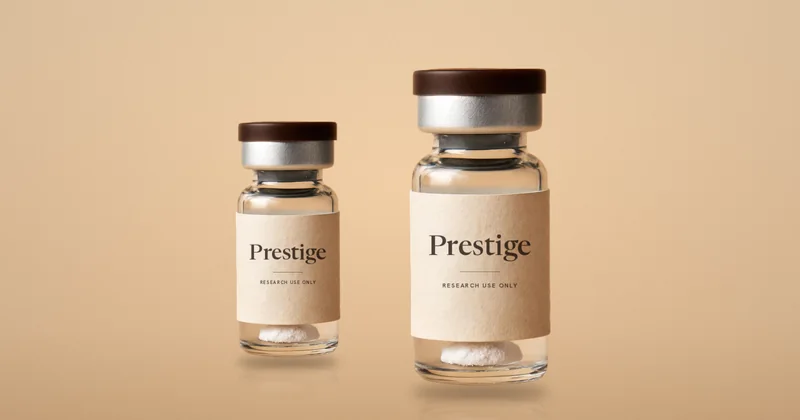
Most lab reports put two numbers near the top: a purity percentage and a content amount. They sit side by side, so they are easy to mix up, but they answer different questions. Purity tells you what share of the material is the compound named on the label. Content tells you how much of that compound the lab measured in the vial it tested. This guide explains both, with an example from one of the reports linked on our product pages.
The short version
A report can show a high purity with a low content, or the other way round. Read both.
Purity: a share, not an amount
Purity is measured with high performance liquid chromatography (HPLC). The lab dissolves a little of the sample and runs it through a column that separates the compounds in it. A detector records each one as a peak as it comes out, and purity is the main peak’s share of all the peaks the detector saw.
Two things follow from how it works. Purity says nothing about how much powder is in the vial: a vial holding half its label amount can still test at 99%. And purity only counts what the detector sees. Water doesn’t show up as a peak, so it isn’t part of the percentage, even though it is part of the powder’s weight.
Content: an amount, compared with the label
Content is the number of milligrams of the compound the lab found in the vial it tested. The lab measures it against a reference and reports the total, and the figure to compare it with is the amount printed on the label.
A vial of freeze dried powder isn’t only the compound. The powder also holds salts left over from making it and a little water, so the powder can weigh more than the compound in it. Content counts only the compound itself.
Some labs give content as a percentage of the powder’s weight instead of milligrams per vial, often called net peptide content. Check which kind a report uses before you compare numbers between reports.
An example from our reports
The report below comes from Freedom Diagnostics and uses HPLC with UV detection coupled with mass spectrometry (LC-MS). It is linked on the NAD+ product page, next to the strength it belongs to.
| Report | Label | Purity | Content | Identity |
|---|---|---|---|---|
| NAD+ 1000mg | 1000 mg | 99.98% | 1084.87 mg | Confirmed |
Purity is close to 100%, so almost everything the detector saw was the named compound. The content number says something else: the tested vial held about 8% more than its label.
A content result describes the vial that was tested, not every vial. Filling powder is never exact, so other vials can land a little above or below. What this report shows is that the lab found more than the label amount in the vial it tested.
What to check on a report
- The product and strength on the report match the vial you are looking at.
- Purity and content are both there, and you know which kind of content it is: milligrams per vial or a percentage.
- Identity is confirmed, so the numbers are about the right compound.
- The method is named, for example HPLC or LC-MS.
- The report names the lab, and you can contact that lab about it.
For the other parts of a report, such as report numbers, dates and endotoxin screens, see How to read a peptide lab report.
Common questions
Is a higher content always better?
Not on its own. A content number only means something next to a confirmed identity and a high purity, so read the three together.
Why can two reports for the same product show different content?
Each report covers one vial from one batch. Vials vary a little, batches vary more, and labs can use different methods. Compare reports from the same lab and method when you can.
Where do I find the report for a product?
On the product page under Lab results, for each strength, and on our research materials page, which lists them all. If you need documentation for a lot that isn’t listed, contact us.
A report records what a lab measured. It doesn’t approve a material for any use. Our products are sold for laboratory research only, not for human or animal use.