
Research use resources
Wolverine blend lab report: BPC-157 and TB-500 in one vial
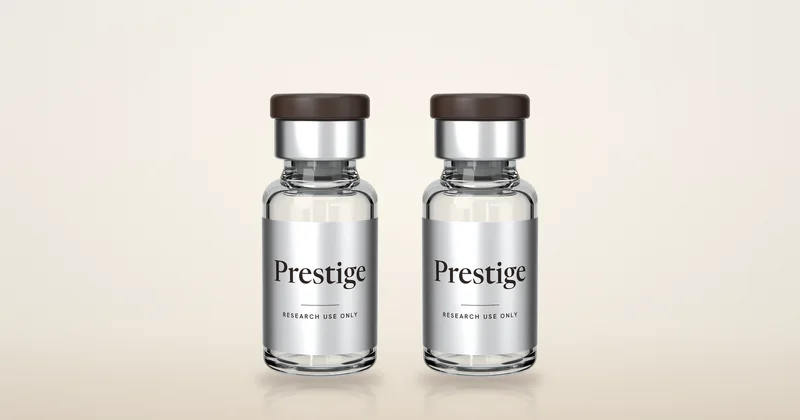
Wolverine is the name used for a blend of two research peptides in one vial: BPC-157 and TB-500, usually 10 mg of each. Because there are two compounds, its lab report has more to show than a single peptide report: a peak for each peptide, an amount for each one, and a purity for the blend. This guide covers what a Wolverine blend certificate of analysis (COA) should show and walks through our own report, line by line. For the basics of any report, see How to read a peptide lab report.
The short version
What is in a Wolverine vial
The two peptides are very different in size. BPC-157 is a chain of 15 amino acids. TB-500 is a much longer chain based on thymosin beta-4. They are separate compounds, mixed in equal amounts before the powder is freeze dried, so the vial label carries two amounts that add up to the total.
| Reference fact | Wolverine Blend, as on our product page |
|---|---|
| Peptides | BPC-157 and TB-500 |
| Amount on the label | 10 mg BPC-157 + 10 mg TB-500 (20 mg in all) |
| Form | Freeze dried (lyophilized) powder in a sealed vial |
| Lab report | Kovera Labs, KVR-2026-CB1C79, certified Sep 7, 2026 |
Purity: two peaks, one number
HPLC pushes the sample through a column, and each compound comes out at its own time. On a Wolverine trace that means two tall peaks: one for BPC-157 and one for TB-500. Small peaks around them are anything else in the sample.
On our report (reversed phase HPLC, C18 column, read at 214 nm), BPC-157 comes out a little before 15 minutes and TB-500 a little before 19 minutes, with flat baseline between them. That gap matters: when the two main peaks stand well apart, the lab can measure each one cleanly. The blend purity on the report is 99.614%, against a standard of more than 98%.
One thing not to do is compare the peptides by peak height. Each compound absorbs the detector’s light differently, so equal amounts can draw peaks of different heights. On our trace the TB-500 peak is the shorter one, even though TB-500 measured a little more. Amounts come from the component table, not from the drawing.
Identity: both peptides, by mass
Liquid chromatography with mass spectrometry (LC-MS) weighs what comes out of the column and confirms each main peak is the compound it should be. On a blend report, the identity line should name both peptides. Ours reads BPC-157/TB-500 against a reference of BPC-157/TB-500, with a check mark. A report that names only one of the two has not confirmed the other.
Content: check each peptide, not just the total
Content is how many milligrams of each peptide the lab measured in the vial. The report gives a total and a row for each compound:
| On our report | Label | Measured | Of label |
|---|---|---|---|
| BPC-157 | 10 mg | 10.34 mg | 103.4% |
| TB-500 | 10 mg | 11.06 mg | 110.6% |
| Blend total | 20 mg | 21.40 mg | 107.0% |
The total is the sum of the two rows, so you can check it yourself: 10.34 plus 11.06 is 21.40. Still, read the rows. A total can look right while one peptide is short, because the other one makes up the difference. Filling small amounts of powder is never exact, so each peptide landing a little above its label is normal; one far below its label is the thing to look for. Content is a separate number from purity, which Purity vs content explains.
Endotoxin screen
Endotoxins are bits of bacterial cell wall that can survive in a powder even when it is chemically pure. Our report lists an endotoxin safety screen with a limit of 0.5 EU/mL or less, and the result PASS. A screen like this is useful for any research work where endotoxins could affect a cell based result.
The rest of the report
- Batch: 0001, matching the lot shown on our product page.
- Labeled quantity: 20 mg, the blend total.
- Cap and crimp: blue cap, silver crimp, so the vial photographed on the report can be matched to the one tested.
- Client name hidden: labs often print this on reports for sellers. The report number is what ties it to us; it is the one linked from the product page.
Checking a Wolverine report, step by step
- Both names: BPC-157 and TB-500, with an amount for each on the label and on the report.
- Two main peaks on the HPLC trace, well apart, with the wavelength named (ours: 214 nm).
- Blend purity of 98% or higher (ours: 99.614%).
- Identity confirming both peptides by mass (ours: LC-MS, BPC-157/TB-500).
- Each peptide’s content close to or above its label (ours: 10.34 mg and 11.06 mg).
- The lab and report number, matching the report linked on the Wolverine Blend product page.
Each half of the blend has its own guide too: BPC-157 lab report and TB-500 lab report. For blends with three or four peptides, see How to read a peptide blend lab report.
Common questions
Why is the TB-500 peak shorter if it measured more?
Peak height depends on how strongly each compound absorbs the detector’s light, not only on how much of it there is. The amounts come from the component table.
Is one purity number enough for a blend?
It tells you how clean the sample is overall. Pair it with the component rows, which show that each peptide is there in the right amount.
Where is the Wolverine report?
On the Wolverine Blend product page under Specifications & documentation, and on our research materials page, which lists every report.